The global industrial landscape is increasingly relying on high-performance mineral fillers to enhance material properties, and among these, non metallic mica powder stands out as a versatile powerhouse. From its exceptional thermal stability to its unique dielectric properties, this mineral derivative is essential for manufacturers seeking to balance structural integrity with specialized functional requirements in demanding environments.
Understanding the nuances of non metallic mica powder is not merely a technical necessity but a strategic advantage. In an era where sustainability and precision engineering converge, the ability to leverage mica's natural plate-like structure allows for the creation of products that are more durable, heat-resistant, and electrically insulating, directly impacting the efficiency of electronics, automotive parts, and high-end cosmetics.
As we delve deeper into its applications, it becomes clear that the strategic integration of this powder can significantly reduce production costs while improving the longevity of the final product. By mastering the selection and application of various grades of mica, industries can navigate the complex challenges of modern manufacturing, ensuring that their materials meet stringent international standards of quality and safety.
Global Industrial Relevance of Non Metallic Mica Powder
The demand for non metallic mica powder has surged globally as industries shift toward lightweight and high-strength composite materials. According to industry trends aligned with ISO quality standards, the integration of mica in polymers and rubber has become a benchmark for achieving superior dimensional stability. This global relevance is driven by the push for energy-efficient vehicles and aerospace components where weight reduction cannot come at the expense of thermal protection.
However, the industry faces a persistent challenge: the inconsistency of raw mineral purity. Many manufacturers struggle with contaminants that compromise the dielectric strength of the finished product. By adopting refined processing techniques, the industry is now able to provide ultra-pure mica powders that solve these critical failure points, ensuring that high-voltage insulators and cosmetic pigments remain stable and safe for end-users.
Defining the Technical Essence of Mica Powder
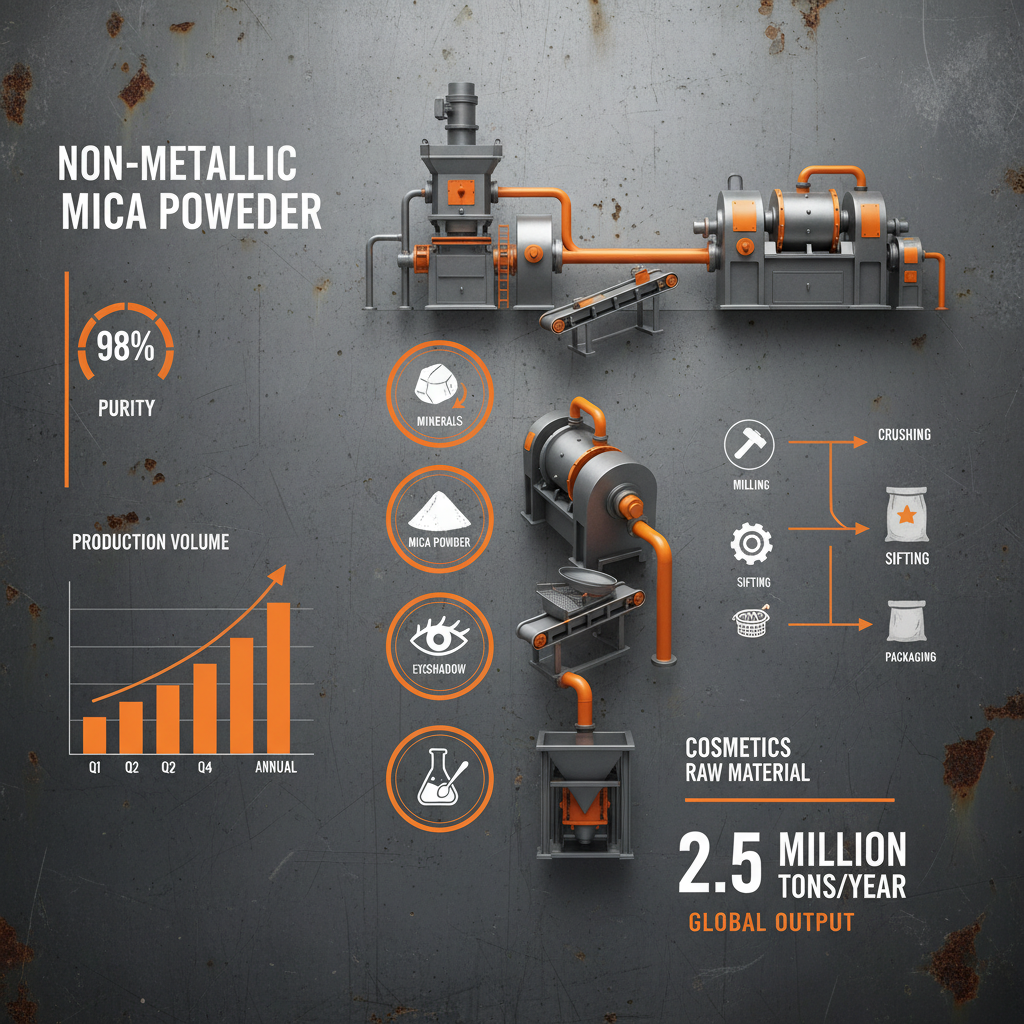
In simple terms, non metallic mica powder is a finely ground mineral substance derived from mica flakes, characterized by its distinct layered silicate structure. This "platelet" morphology is what gives the material its unique ability to create a tortuous path for gases and liquids, effectively acting as a barrier in coatings and plastics. Unlike metallic fillers, it provides high electrical resistivity, making it indispensable for electronic insulation.
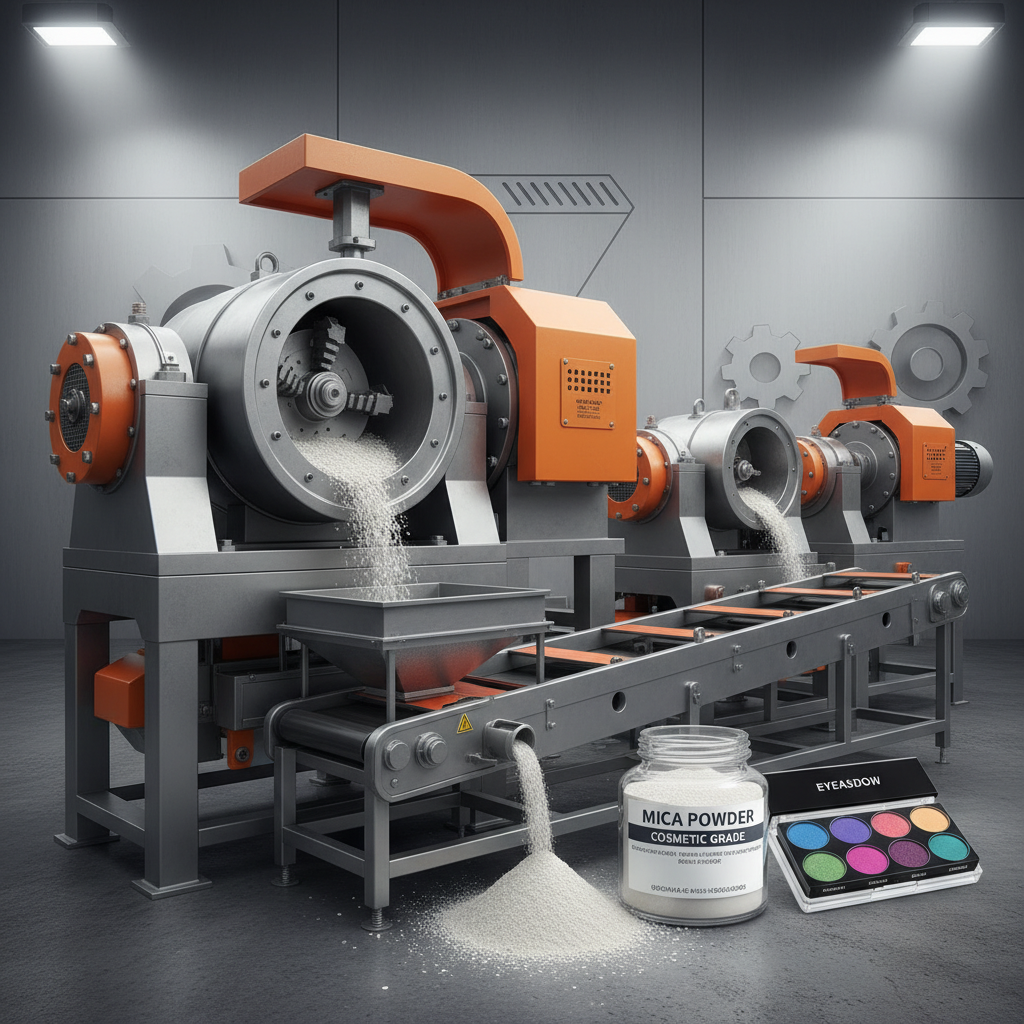
Beyond the technical definition, this material connects modern industrial needs with geological abundance. In the cosmetic world, it is the secret behind the "shimmer" in pearlescent pigments, while in heavy industry, it serves as a critical additive for rubber compounds used in high-pressure hoses. Its ability to remain chemically inert ensures that it does not react with other additives, maintaining the purity of the chemical formulation.
From a humanitarian and safety perspective, the move toward high-purity non metallic mica powder reduces the risk of heavy metal contamination in consumer products. By adhering to strict refining processes, manufacturers ensure that the mica used in skincare or food-grade packaging is devoid of harmful impurities, bridging the gap between raw mineral extraction and consumer safety.
Core Components of High-Quality Mica Performance
The primary factor determining the efficacy of non metallic mica powder is its aspect ratio. The ratio of the platelet's diameter to its thickness dictates how well the powder can reinforce a matrix. A high aspect ratio ensures better mechanical strength and superior barrier properties, which are essential for preventing moisture penetration in modified plastics.
Thermal stability is another cornerstone of mica performance. Because non metallic mica powder can withstand extreme temperatures without decomposing or losing its structural integrity, it is the preferred choice for high-temperature electrical insulation and automotive engine components. This thermal resilience ensures that components do not warp or fail under intense heat stress.
Finally, chemical inertness and particle size distribution play critical roles. A tight control over the micron size allows for a smooth finish in mica powder paint and consistent opacity in cosmetics. When the particles are uniformly distributed, the resulting material exhibits isotropic properties, meaning it performs consistently regardless of the direction of the applied force or heat.
Comparative Efficiency in Industrial Applications
When comparing different grades of mica, the choice usually depends on the specific balance between cost and performance. For instance, cosmetic-grade powders prioritize luminosity and purity, whereas industrial-grade powders for rubber focus on reinforcement and heat dissipation. The efficiency of non metallic mica powder is measured by how much a small percentage of additive can improve the overall bulk properties of the base polymer.
In practical terms, switching to a high-purity modified mica can often reduce the total amount of filler required to achieve the same mechanical strength, thereby reducing the overall weight of the product. This efficiency is particularly visible in the production of reinforced plastics, where mica's plate-like structure outperforms spherical fillers in providing gas barrier properties.
Performance Efficiency of Non Metallic Mica Powder Variants
Global Use Cases and Regional Adoption
In the Asia-Pacific region, the adoption of non metallic mica powder is heavily concentrated in the electronics and automotive sectors. For example, in the manufacturing hubs of East Asia, mica is extensively used in the production of capacitors and high-voltage insulators. The region's focus on electric vehicle (EV) development has further accelerated the demand for mica-reinforced plastics that can protect battery cells from thermal runaway.
Conversely, in North America and Europe, there is a significant emphasis on the "green" transition of the paint and coatings industry. Environmental regulations have pushed manufacturers toward water-based paints, where mica powder is used to improve weather resistance and UV protection for architectural coatings. In remote industrial zones, mica-based reinforcements are used in heavy-duty rubber piping for mining operations, proving the material's reliability in the harshest physical environments.
Long-Term Value and Sustainability Benefits
The long-term value of non metallic mica powder extends beyond immediate performance; it is rooted in sustainability. Because mica is a naturally occurring mineral, its carbon footprint during extraction is significantly lower than that of synthetic polymer fillers. Furthermore, its ability to extend the lifespan of products—by preventing degradation and increasing heat resistance—directly reduces the frequency of replacement, thereby lowering total waste in the industrial lifecycle.
From a logical angle, the investment in high-quality mica reduces the risk of catastrophic failure in electrical systems, providing a layer of safety and trust for the end-user. The stability offered by mica ensures that electrical components do not leak current or overheat, which is critical for infrastructure longevity. This reliability translates into lower maintenance costs and higher operational uptime for industrial plants.
Emotionally, the shift toward ethically sourced and highly refined mica represents a commitment to corporate social responsibility. By ensuring a transparent supply chain and eliminating impurities, brands can guarantee that their products—especially in cosmetics—are safe, pure, and innovative. This builds a deeper bond of trust between the manufacturer and the consumer, adding intangible brand value to the tangible material benefits.
Future Innovations and Market Trends
Looking ahead, the future of non metallic mica powder is being shaped by nanotechnology. Researchers are developing "nano-mica" platelets that can be dispersed more evenly in polymers, allowing for even thinner yet stronger materials. This innovation is expected to revolutionize the packaging industry, creating biodegradable films that possess the gas barrier properties of traditional plastics without the environmental cost.
Digital transformation is also playing a role through the implementation of AI-driven sorting and grinding processes. Automation allows for the creation of "custom-grade" mica powders, where the particle size and shape are tailored to a customer's specific viscosity or reflectivity requirements. This precision manufacturing minimizes waste and ensures that the material is optimized for the specific application, whether it be a high-end automotive coating or a specialized medical device.
Moreover, the trend toward "circular economy" models is encouraging the recycling of mica-reinforced composites. New chemical processes are being developed to separate mica from aged rubber or plastics, allowing the mineral to be recovered and reused. This closes the loop on material usage and aligns the mica industry with global net-zero emissions goals, ensuring its relevance in a sustainable future.
Technical Analysis of Non Metallic Mica Powder Application Trends
| Application Sector |
Key Performance Driver |
Innovation Level (1-10) |
Market Growth Potential |
| EV Battery Housing |
Thermal Insulation |
9 |
Very High |
| Eco-Friendly Paints |
UV Resistance |
7 |
High |
| Luxury Cosmetics |
Optical Purity |
8 |
Steady |
| Industrial Rubber |
Mechanical Strength |
6 |
Moderate |
| Aerospace Composites |
Dielectric Strength |
10 |
High |
| Biodegradable Packaging |
Gas Barrier |
9 |
Exponential |
FAQS
Unlike spherical fillers, the plate-like structure of mica creates a physical barrier that improves gas and moisture resistance. Additionally, its exceptional dielectric strength and thermal stability make it superior for electrical insulation and high-heat environments where other minerals might fail or conduct electricity.
Particle size is critical; finer powders are used in cosmetics for a smooth, shimmering effect and in high-precision electronics for uniform insulation. Coarser powders are typically preferred in rubber and plastic reinforcement to provide better structural support and mechanical strength due to their larger surface area for bonding.
Yes, provided it is cosmetic-grade. High-quality mica undergoes rigorous purification to remove heavy metals and impurities. When sourced from reputable manufacturers who follow ISO and safety standards, it is completely inert and safe for skin contact, offering a natural alternative to synthetic glitters.
Absolutely. Mica has a very high melting point and low thermal conductivity. When integrated into modified plastics, it helps the material maintain its shape and strength at elevated temperatures, preventing warping and enhancing the overall thermal stability of the component.
The choice depends on your primary goal: if you need luminosity, choose a pearlescent or cosmetic grade; for mechanical reinforcement, look for industrial-grade mica with a high aspect ratio; and for electrical components, prioritize high-purity, low-conductivity grades. Always request a technical data sheet (TDS) to verify particle size and purity.
Mica is a natural mineral, making it more sustainable than many synthetic chemical fillers. Furthermore, by extending the lifespan of industrial products through better durability and heat resistance, mica helps reduce the overall volume of waste generated by premature product failure.
Conclusion
In summary, non metallic mica powder is far more than a simple filler; it is a critical engineering component that enables innovation across a vast array of industries. From the shimmering finishes of high-end cosmetics to the rigorous demands of aerospace insulation and the sustainability goals of the modern packaging industry, mica provides an unparalleled combination of thermal stability, dielectric strength, and mechanical reinforcement.
As we move toward a future defined by green energy and high-precision manufacturing, the strategic adoption of optimized mica grades will be a key differentiator for companies seeking to improve product longevity and efficiency. We encourage manufacturers to explore high-purity mica solutions to stay ahead of the curve in material science. Visit our website: www.hjmica.com