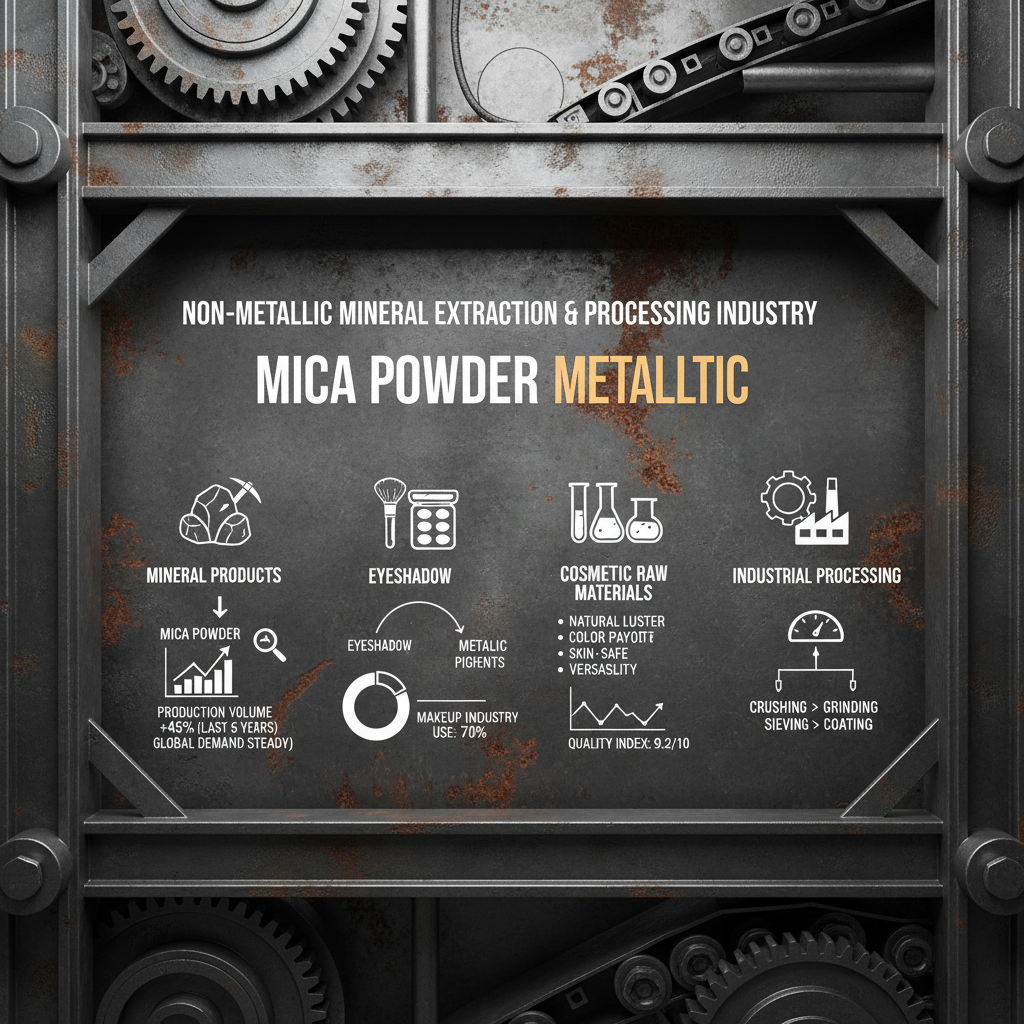
In the competitive landscape of modern industrial coatings and cosmetics, mica powder metallic has emerged as a pivotal material for achieving high-end aesthetic finishes. By combining the natural insulating properties of mica with advanced metallic coatings, manufacturers can create surfaces that exhibit a brilliant, reflective luster while maintaining structural integrity and chemical stability.
The global demand for these specialized pigments is driven by a shift toward premiumization in the automotive, architectural, and personal care sectors. As consumers increasingly demand products that look sophisticated yet remain durable, the role of mica powder metallic becomes essential in bridging the gap between raw mineral utility and luxury visual appeal.
Understanding the technical nuances of this material—from its refractive index to its particle size distribution—allows engineers and designers to optimize the "pearlescent effect." Whether used in a high-performance rubber compound or a luxury lipstick, the correct application of these metallic minerals ensures a consistent, shimmering finish that withstands environmental stressors.
Global Market Context of Mica Powder Metallic
The global distribution of mica powder metallic is closely tied to the mining capacities of regions like India, Brazil, and China. With the rise of ISO-certified manufacturing standards, the industry has moved toward highly purified synthetic and natural micas to ensure that metallic coatings adhere uniformly, reducing the risk of "spotting" in high-end paints and cosmetics.
Recent trade data suggests a steady CAGR in the pearlescent pigment sector, as the automotive industry transitions toward "liquid metal" looks. The challenge lies in maintaining a sustainable supply chain while meeting the rigorous purity requirements of the EU and FDA, ensuring that metallic effects do not compromise the safety or environmental footprint of the final product.
Defining the Composition of Mica Powder Metallic
At its most basic level, mica powder metallic is a composite material where a base of muscovite or phlogopite mica is coated with thin layers of metal oxides—most commonly titanium dioxide or iron oxide. This layered structure acts as a series of microscopic mirrors, reflecting light at specific angles to create the characteristic metallic shimmer.
Unlike standard metallic flakes, which can sometimes settle or clump, the plate-like structure of mica provides a stable substrate. This ensures that the metallic sheen is evenly distributed across the medium, whether it is suspended in a clear coat for a car or blended into a pearlescent cosmetic cream.
The "metallic" aspect is not merely a color but an optical property. By varying the thickness of the oxide layer, manufacturers can produce a spectrum of effects, from soft champagne gold to deep, futuristic silvers, making it a versatile tool for designers across multiple industries.
Core Technical Factors for Performance
One of the most critical factors for mica powder metallic is particle size distribution. The size of the mica flakes determines the "sparkle" or "glow" of the finish; larger flakes create a bold, glittery effect, while finer powders produce a smooth, satin-like metallic sheen.
Chemical stability is equally vital. High-quality mica powder metallic must be resistant to oxidation and UV degradation. In outdoor applications, such as architectural coatings or modified plastics, the material must prevent the metallic luster from fading under prolonged sunlight exposure.
Finally, the aspect ratio of the mica plates influences the opacity and hide of the coating. A higher aspect ratio allows for better alignment of the particles during the drying process, which maximizes the reflective surface area and enhances the overall visual impact of the metallic finish.
Industrial Applications and Use Cases
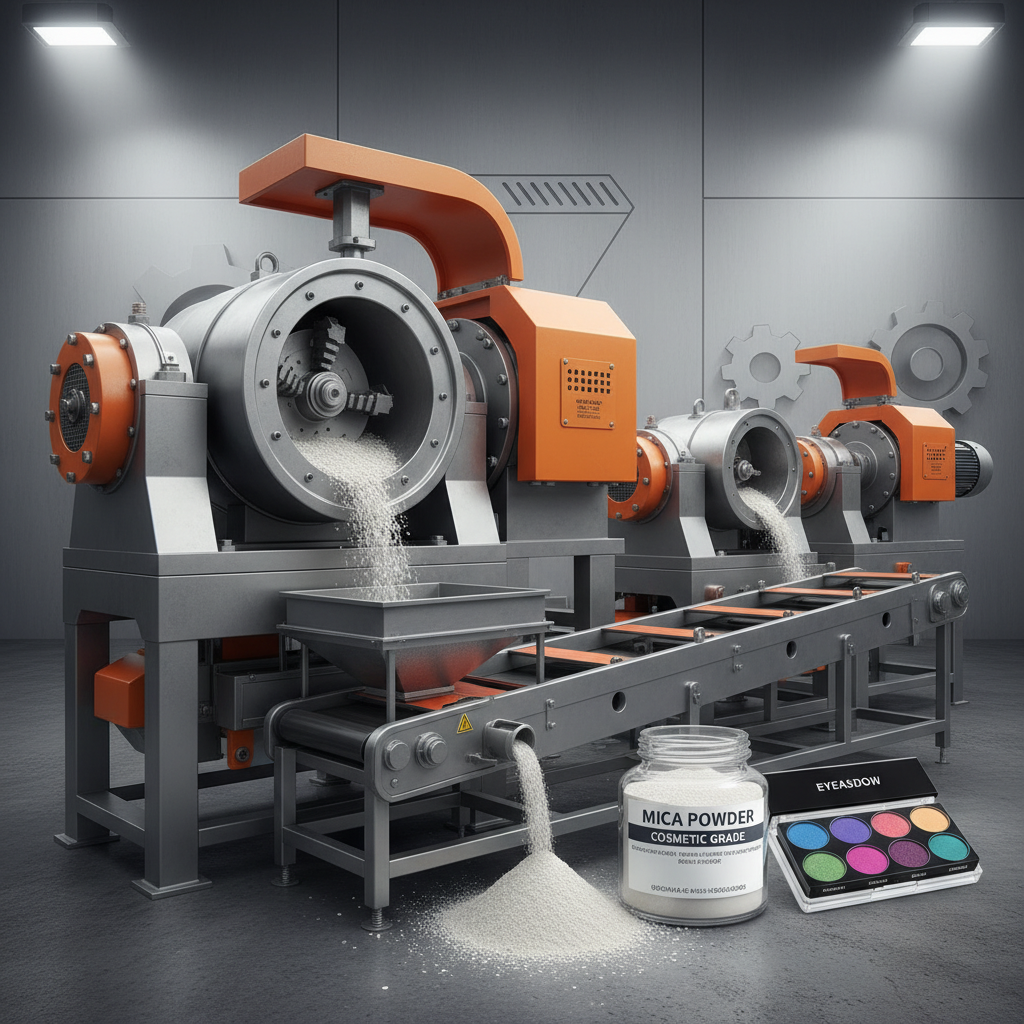
The versatility of mica powder metallic allows it to serve diverse roles. In the plastics and rubber industry, it is used as a functional filler that provides both aesthetic value and improved heat resistance. For instance, in modified plastics for electronics, it helps in managing thermal expansion while giving the casing a premium metallic look.
In the realm of cosmetics, the focus shifts to purity and skin-feel. mica powder metallic is used in eyeshadows, nail polishes, and highlighters, where its ability to reflect light mimics the natural glow of healthy skin or the brilliance of precious metals.
Efficiency Ratings of Mica Powder Metallic Variations
Long-Term Value and Economic Advantages
Integrating mica powder metallic into product lines offers significant long-term economic value by increasing the perceived value of the end product. In the automotive and consumer electronics markets, a metallic finish is often associated with luxury and precision engineering, allowing brands to position their products in a higher price bracket.
Beyond aesthetics, the reliability of these minerals reduces the need for expensive multi-layer painting processes. By achieving a rich metallic effect in fewer coats, manufacturers can lower labor costs and reduce the amount of volatile organic compounds (VOCs) released into the environment, aligning economic gain with sustainable practice.
Future Trends in Metallic Mineral Pigments
The future of mica powder metallic is leaning heavily toward "smart pigments" that can change color based on temperature or light angle. Researchers are exploring the integration of nanostructures to create pigments that offer holographic effects, moving beyond simple metallic reflections to complex light-diffracting patterns.
Sustainability is also driving innovation. The industry is shifting toward ethically sourced, child-labor-free mica and the development of biodegradable synthetic alternatives. This transition ensures that the beauty of metallic pigments does not come at a social or environmental cost.
Furthermore, the adoption of digital color matching and AI-driven formulation is allowing manufacturers to create hyper-specific metallic shades. This means mica powder metallic can now be tailored to exact brand identity specifications with unprecedented accuracy and speed.
Overcoming Common Implementation Challenges
One of the primary challenges when working with mica powder metallic is the issue of particle orientation. If the mica flakes do not lay flat against the surface, the resulting finish can appear dull or "grainy" rather than metallic. This is typically solved through the use of specialized application techniques, such as controlled spray patterns or the addition of rheology modifiers.
Another common hurdle is the compatibility of the pigment with different resin systems. Some metallic micas may clump in water-based paints or react with certain plastic polymers. Expert formulation involves testing the surface tension and using coupling agents to ensure a seamless dispersion of the powder.
Finally, maintaining color consistency across different batches remains a technical challenge. By implementing strict quality control protocols and utilizing spectrophotometers, manufacturers can ensure that every gram of mica powder metallic meets the exact hue and luster requirements of the client.
Comparative Analysis of Mica Powder Metallic Implementation
| Application Sector |
Key Performance Metric |
Typical Challenge |
Optimal Solution |
| Automotive Paint |
Specular Gloss |
Flake Orientation |
Electrostatic Spraying |
| Cosmetic Makeup |
Dermal Purity |
Heavy Metal Traces |
Synthetic Fluorophlogopite |
| Industrial Rubber |
Thermal Stability |
Aggregation |
High-Shear Mixing |
| Modified Plastics |
Impact Strength |
Interfacial Bonding |
Silane Coupling Agents |
| Architectural Coating |
UV Resistance |
Color Fading |
TIO2 Protective Layers |
| Printing Inks |
Viscosity Control |
Clogging |
Micronized Particle Sizing |
FAQS
Unlike glitter, which consists of large plastic or metal shards, mica powder metallic is a mineral-based pigment with a plate-like structure. This allows it to blend seamlessly into liquids and resins, providing a sophisticated, pearlescent glow rather than a chunky, sparkling effect. It is also generally more heat-resistant and chemically stable than plastic glitters.
Yes, mica is naturally heat-resistant. When used in modified plastics, mica powder metallic not only provides a metallic aesthetic but also improves the dimensional stability of the plastic at high temperatures. However, it is important to choose a grade of mica that is specifically processed for thermoplastic extrusion to avoid degradation of the metallic coating.
Synthetic mica (fluorophlogopite) is often preferred for high-end cosmetics because it is more transparent and has a higher purity level than natural mica. This results in a "cleaner" and more vibrant metallic effect. Additionally, synthetic versions eliminate the risk of impurities and ethical concerns associated with some natural mining operations.
Settling is a common challenge with mica powder metallic due to its density. To prevent this, we recommend adding anti-settling agents or rheology modifiers (such as fumed silica or certain polymers) to the formula. These additives create a network within the liquid that holds the mica particles in suspension until the paint is applied.
Actually, mica is an electrical insulator. While mica powder metallic looks like metal, it does not conduct electricity. This makes it ideal for applications where a metallic appearance is desired but electrical insulation is required, such as in the housings of electronic components or specialized insulating coatings.
To achieve a deeper gold, you should look for mica powder metallic with a higher iron oxide content in the coating layer. Additionally, applying the pigment over a dark yellow or black base coat can enhance the contrast and depth, making the metallic gold appear more rich and opulent.
Conclusion
The integration of mica powder metallic into modern manufacturing represents a perfect synergy between mineral science and commercial aesthetics. From its precise chemical composition to its wide array of industrial applications in cosmetics, plastics, and coatings, this material provides an unparalleled ability to elevate product design while maintaining functional durability. By focusing on particle orientation, purity, and sustainable sourcing, companies can unlock the full potential of these metallic pigments.
As we look toward the future, the shift toward synthetic, ethically sourced minerals and "smart" pearlescent effects will likely redefine the luxury standards of the industry. For manufacturers seeking to enhance their product's visual appeal without compromising on technical performance, investing in high-grade mica powder metallic is a strategic move toward innovation and market leadership. Visit our website for more professional solutions: www.hjmica.com