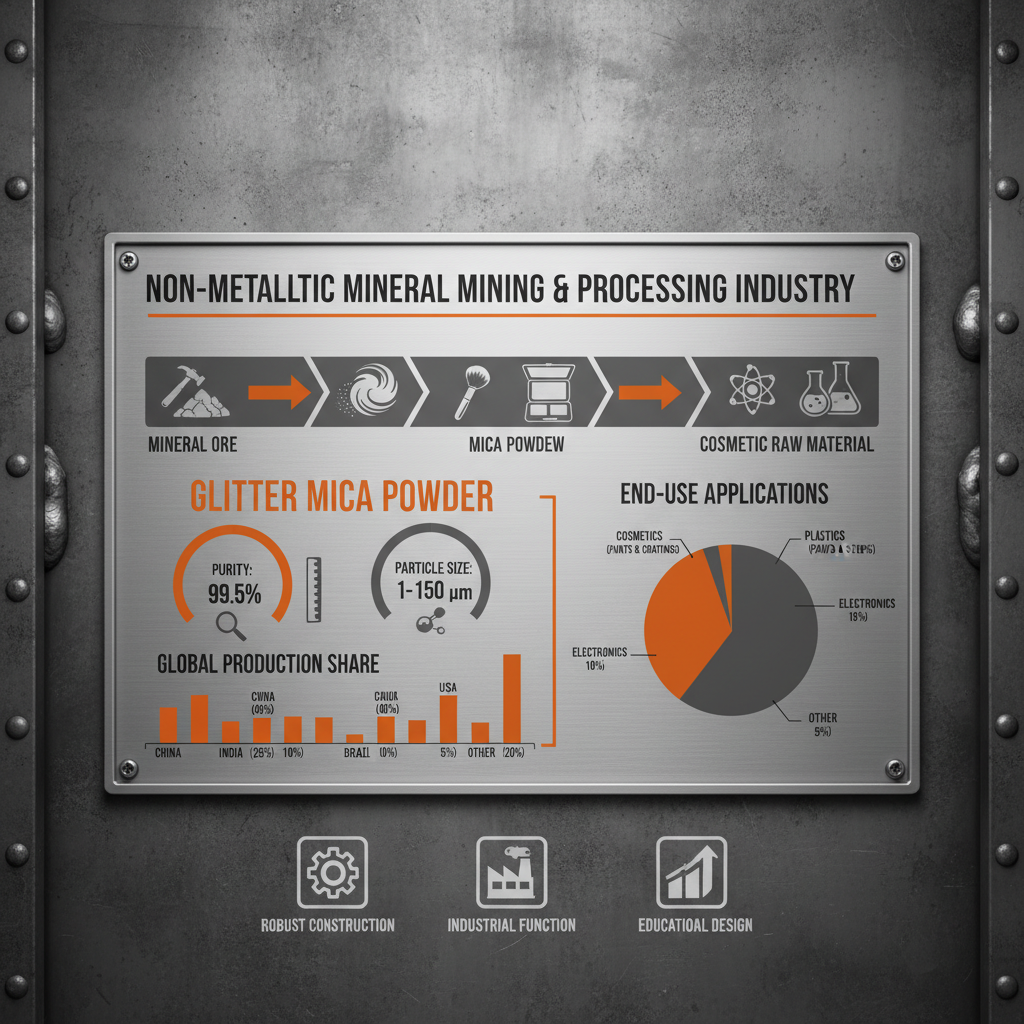
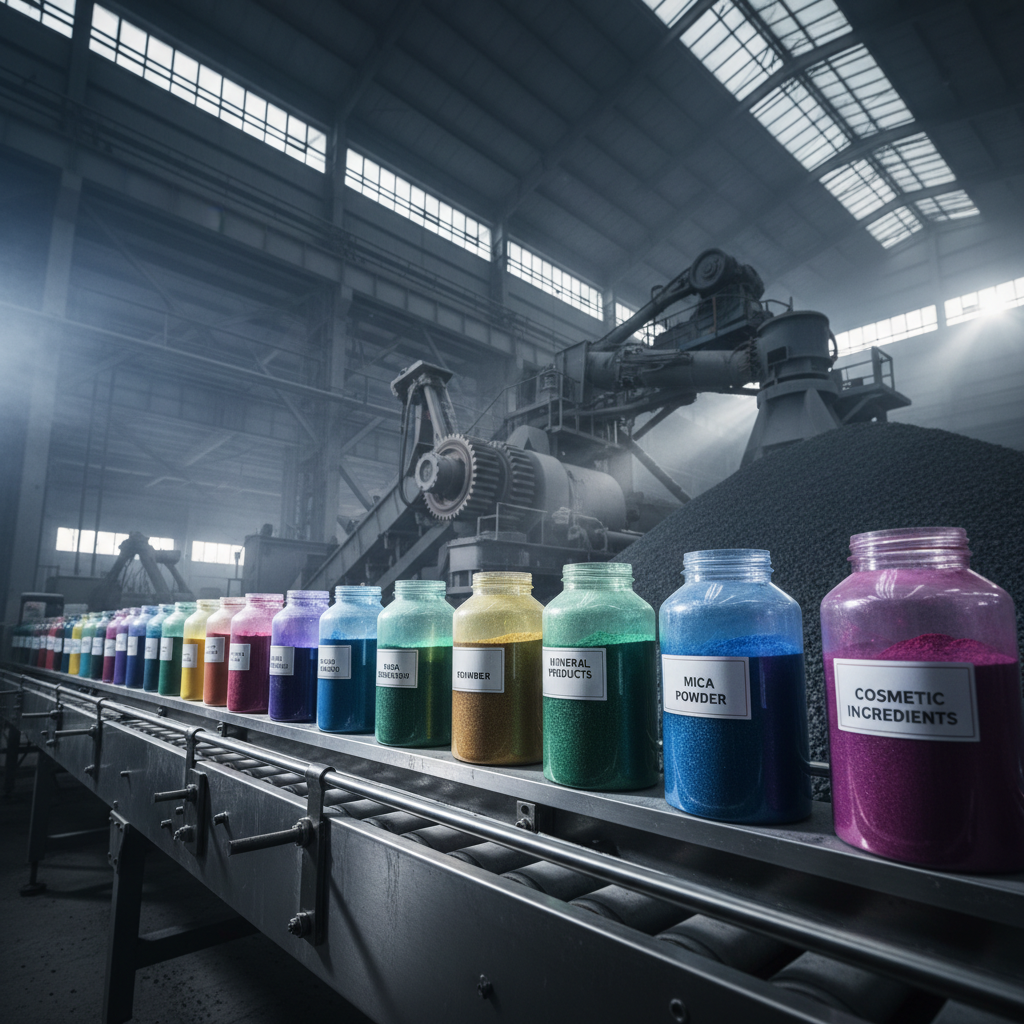
In the competitive landscape of modern aesthetics and industrial coatings, glitter mica powder has emerged as a pivotal material that bridges the gap between raw mineral utility and high-end visual appeal. This versatile mineral additive is prized for its unique ability to reflect light, creating a shimmering effect that enhances the perceived value of products across the cosmetic, automotive, and plastics industries. Understanding the properties of these pearlescent pigments is essential for manufacturers aiming to achieve consistent brilliance and long-term durability in their final applications.
Globally, the demand for high-quality mineral additives is driven by a shift toward sustainable and ethically sourced materials. As regulatory bodies like ISO and various environmental agencies tighten standards on heavy metals and synthetic glitters, the industry is pivoting toward natural mica solutions. The challenge lies in maintaining a high refractive index and uniform particle size distribution while ensuring that the sourcing processes adhere to strict ESG (Environmental, Social, and Governance) criteria.
By integrating glitter mica powder into product formulations, brands can achieve a spectrum of effects from subtle satin sheens to intense metallic sparkles. This flexibility not only satisfies consumer demand for luxury finishes but also provides functional benefits, such as improved heat resistance in plastics and enhanced UV protection in automotive paints, making it a cornerstone of contemporary non-metallic mineral manufacturing.
The Fundamental Composition of Glitter Mica Powder
At its core, glitter mica powder is a complex silicate mineral consisting of aluminum, potassium, and oxygen. The "glitter" effect is achieved through the precise layering of metal oxides—typically titanium dioxide or iron oxide—onto the natural mica flakes. This creates a thin-film interference effect where light waves reflect off multiple layers, resulting in the characteristic pearlescent luster that is highly sought after in the cosmetic and coating industries.
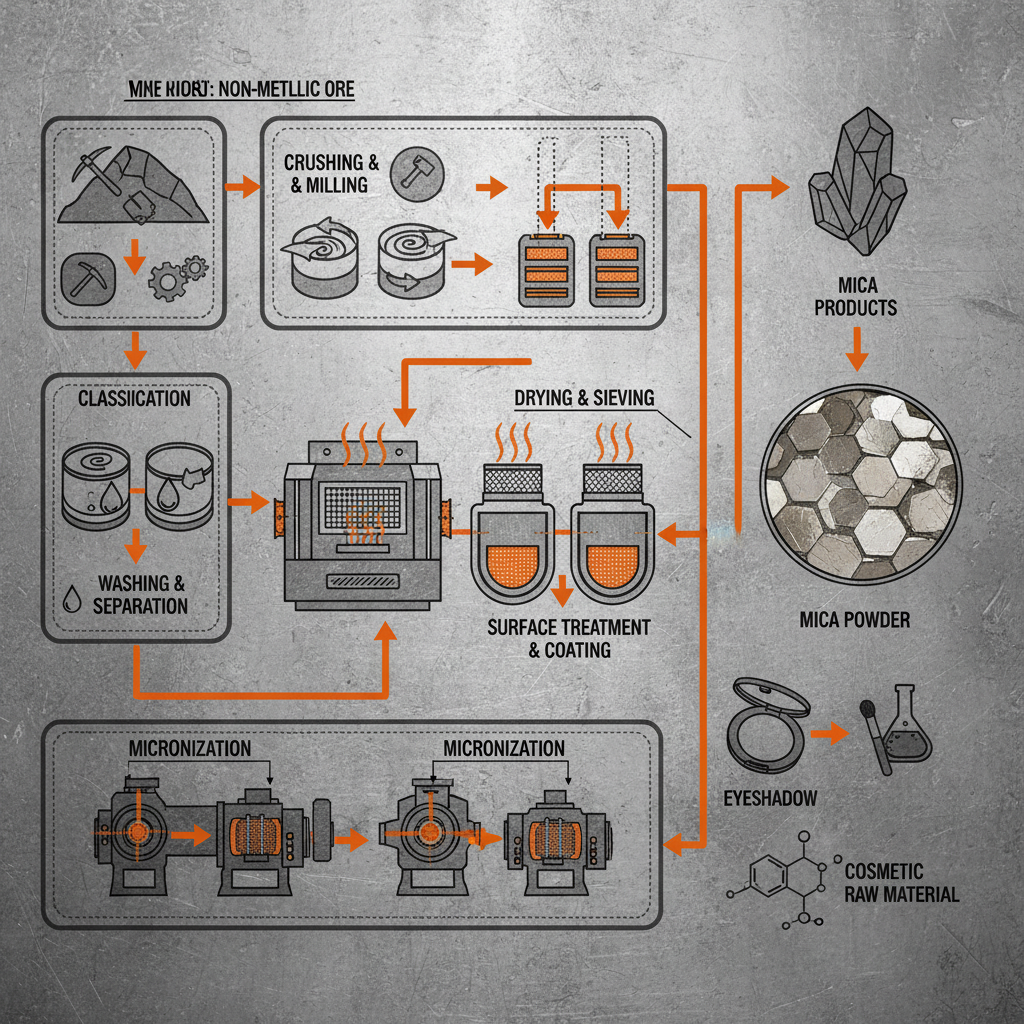
The manufacturing process involves rigorous grinding and micronization to ensure that the particles are uniform in size. This structural precision is what allows the powder to lay flat on a surface, maximizing the reflection area and ensuring that the shimmer remains consistent regardless of the angle of view. For high-end applications, the purity of the base mica is paramount to prevent unwanted discoloration or contamination in sensitive formulations.
Critical Quality Factors for Industrial Performance
One of the primary factors determining the quality of glitter mica powder is its particle size distribution. In the automotive paint sector, for instance, larger flakes are often preferred to create a bold, metallic "flip" effect, whereas the cosmetic industry requires ultra-fine powders to ensure a smooth, non-gritty feel on the skin. Achieving this balance requires advanced centrifugal separation and air-classification technologies.
Chemical stability and heat resistance also play a crucial role, particularly when the powder is integrated into modified plastics or rubber. Because mica is naturally inert, it can withstand high processing temperatures without degrading or losing its reflective properties. This thermal stability makes it an ideal choice for injection molding and extrusion processes where other synthetic pigments might burn or shift in color.
Furthermore, the dispersion capability of the powder affects the final product's homogeneity. High-grade mica is treated to minimize agglomeration, ensuring that the glitter is evenly distributed throughout the medium. Whether it is mixed into a clear resin for jewelry or a high-viscosity cream for makeup, the ability of the particles to remain suspended without settling is a key metric of industrial efficiency.
Technical Classification and Grading Systems
The classification of glitter mica powder typically falls into three primary grades: Natural, Synthetic (Fluorphlogopite), and Modified. Natural mica is valued for its organic origin, while synthetic mica offers superior brightness and purity due to the absence of iron impurities, which can otherwise mute the brilliance of the shimmer.
In terms of visual impact, the "glitter" intensity is graded based on the refractive index of the coating. Modified glitter mica powder often employs multi-layer coating techniques, where alternating layers of high and low refractive index materials are applied to create specific color shifts (e.g., gold to green), which are essential for high-fashion cosmetic lines.
Finally, industrial grading considers the "aspect ratio"—the ratio of the flake's diameter to its thickness. A higher aspect ratio generally leads to a more intense glitter effect because the thinner, wider flakes align more efficiently on the substrate, creating a mirror-like surface that enhances the light-reflecting properties of the pigment.
Comparative Efficiency in Manufacturing Applications
When evaluating the efficiency of glitter mica powder across different manufacturing methods, the focus often shifts to the balance between visual brilliance and cost-effectiveness. For example, using mica in plastics provides not only an aesthetic upgrade but also structural reinforcement, reducing the need for additional fillers.
The following data illustrates how different variations of mica powder perform across key industrial metrics, highlighting why specific grades are chosen for specific end-uses.
Industrial Performance Metrics for Glitter Mica Powder
Global Market Applications and Use Cases
The application of glitter mica powder spans several continents and industries. In the Asia-Pacific region, there is a massive surge in the use of mica in electronics and automotive coatings, where the mineral's insulating properties combine with its visual appeal to create high-tech, luxury finishes for consumer electronics and vehicle exteriors.
In North America and Europe, the focus is heavily weighted toward the "Clean Beauty" movement. Here, cosmetic mica is used in eyeshadows, highlighters, and nail polishes, but with a stringent requirement for "conflict-free" sourcing. Beyond beauty, the construction industry in these regions utilizes mica-infused paints for architectural landmarks, providing a shimmering facade that resists weathering and maintains its brilliance over decades.
Long-Term Economic and Sustainable Value
Investing in high-quality glitter mica powder provides significant long-term value by reducing product failure rates and enhancing brand prestige. From a logical standpoint, the durability of mica-based pigments means that products require fewer touch-ups or replacements, which reduces the total cost of ownership for the end consumer and lowers the waste stream.
Emotionally, the use of pearlescent minerals evokes a sense of luxury, trust, and innovation. When a consumer sees a consistent, shimmering finish on a high-end automotive part or a premium cosmetic product, it signals a commitment to quality and attention to detail. This psychological impact is a powerful driver for customer loyalty and market positioning.
Sustainability is now the primary driver of innovation. The transition toward synthetic mica (Fluorphlogopite) allows manufacturers to eliminate the risks associated with artisanal mining while achieving a more consistent chemical profile. This shift not only protects the environment but also ensures a stable supply chain, shielding manufacturers from the volatility of raw mineral markets.
Future Innovations in Pearlescent Technology
The future of glitter mica powder is being shaped by the intersection of nanotechnology and green chemistry. We are seeing the emergence of "smart pigments" that can change color based on temperature or light intensity, achieved by manipulating the nano-layers of metal oxides on the mica substrate. This will open new doors in security printing and adaptive camouflage.
Digital transformation is also optimizing the production process. AI-driven particle analysis now allows manufacturers to customize the "sparkle profile" of the powder to meet exact client specifications, reducing trial-and-error waste. Automation in the coating process ensures that every single mica flake is coated with a uniform thickness, resulting in an unprecedented level of brilliance and color purity.
As the world moves toward a circular economy, the development of biodegradable mica-based coatings is a top priority. Researchers are exploring bio-polymers that can carry the mica particles, ensuring that the end product is fully compostable without sacrificing the aesthetic glitter effect that consumers demand.
Comparison of Mica Technologies and Future Trends
| Technology Type |
Visual Effect |
Sustainability Score |
Primary Use Case |
| Natural Mica |
Classic Shimmer |
6/10 |
Traditional Cosmetics |
| Synthetic Mica |
Ultra-Bright |
9/10 |
High-End Luxury Goods |
| Nano-Coated Mica |
Color Shifting |
7/10 |
Security & Tech Coatings |
| Bio-Polymer Mica |
Soft Glow |
10/10 |
Eco-Friendly Packaging |
| Multi-Layered Mica |
Metallic Deep |
8/10 |
Automotive Finishes |
| Hybrid Mineral Mica |
Satin Matte |
7/10 |
Industrial Rubber/Plastics |
FAQS
Unlike synthetic glitters, which are often made from plastic (PET) and can be environmentally harmful, glitter mica powder is mineral-based. It provides a more sophisticated, pearlescent sheen rather than a chunky sparkle. Furthermore, mica is generally more biocompatible for cosmetic use and offers superior heat resistance for industrial applications, making it a safer and more versatile choice for diverse manufacturing needs.
To prevent settling, it is recommended to use mica powders with a controlled particle size and to employ high-shear mixing equipment. Adding a thickening agent or a suspending agent to your resin can also help keep the glitter mica powder in place. For large-scale industrial production, utilizing a vacuum mixer ensures that no air bubbles are trapped, which helps in achieving a perfectly homogeneous shimmering effect throughout the material.
Synthetic mica is often preferred for high-end applications because it is produced in a controlled environment, resulting in a higher level of purity and transparency. This leads to a "cleaner" and more brilliant glitter effect. Additionally, synthetic mica avoids the ethical concerns associated with natural mica mining, providing a sustainable and consistent supply chain for global brands that prioritize ESG standards.
In most cases, mica actually improves the structural integrity of plastics. Because of its plate-like structure, mica acts as a reinforcing filler that can increase the stiffness and dimensional stability of the polymer. However, the loading percentage must be optimized; excessive amounts can lead to brittleness. When used correctly, it provides a dual benefit of aesthetic brilliance and improved mechanical performance.
The choice depends on the desired visual impact and the application method. For a subtle, silky glow (e.g., luxury skincare), choose ultra-fine powders (under 10 microns). For a distinct, sparkling effect (e.g., nail art or automotive topcoats), larger flakes (20-100 microns) are ideal. Always request a sample to test the "flop" and "sparkle" under the actual lighting conditions where the final product will be displayed.
Mica is chemically inert, making it compatible with almost all resins, oils, and solvents. However, when using extremely acidic or alkaline environments, the metal oxide coating (like titanium dioxide) may be susceptible to degradation over time. We recommend performing a compatibility test if your product contains highly reactive chemicals to ensure the pearlescent effect remains stable throughout the product's shelf life.
Conclusion
In summary, glitter mica powder represents a sophisticated blend of mineral science and artistic application. From its fundamental composition and grading systems to its diverse roles in cosmetics, automotive paints, and modified plastics, it provides an unmatched combination of aesthetic brilliance and functional durability. By balancing technical parameters like particle size and refractive index with a commitment to sustainable sourcing, manufacturers can create products that are not only visually stunning but also ethically sound and industrially robust.
Looking forward, the integration of nanotechnology and AI-driven production will further refine the capabilities of pearlescent pigments, enabling a new era of "intelligent" coatings. For businesses looking to elevate their product line, transitioning to high-purity, sustainable mica solutions is no longer just an option but a strategic necessity. We invite you to explore the possibilities of high-performance mineral additives to drive innovation in your next project. Visit our website: www.hjmica.com