Mica powder, a versatile mineral with a shimmering appearance, finds applications across a surprisingly wide array of industries. From cosmetics and paints to plastics and even electronics, the unique properties of mica – its inertness, reflectivity, and insulating qualities – make it an invaluable component. Understanding the different types of mica powder is crucial for optimizing performance and achieving desired results in these diverse applications. This knowledge allows for tailored solutions, improving product quality and innovation.
The global demand for mica powder is steadily increasing, driven by growth in end-use industries like construction and automotive. According to market research reports, the mica market is projected to reach substantial values in the coming years. However, challenges surrounding ethical sourcing and sustainable mining practices necessitate a deeper look into the various types available and their origins. A thorough comprehension of these nuances is paramount for businesses and consumers alike.
This comprehensive exploration delves into the different types of mica powder, examining their characteristics, applications, and future trends. We will uncover the science behind their brilliance and understand how these seemingly simple minerals contribute significantly to numerous aspects of modern life, and offer vital solutions.
The Composition and Characteristics of types of mica powder
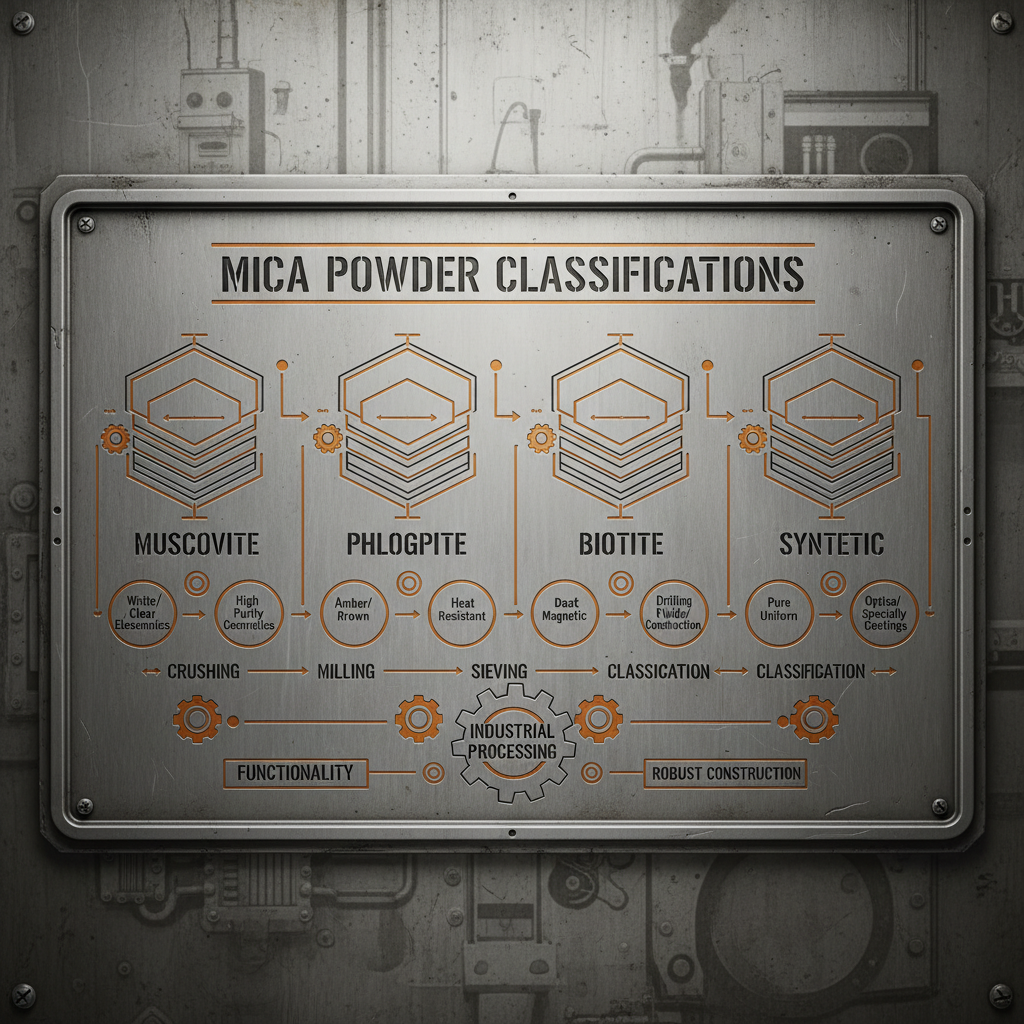
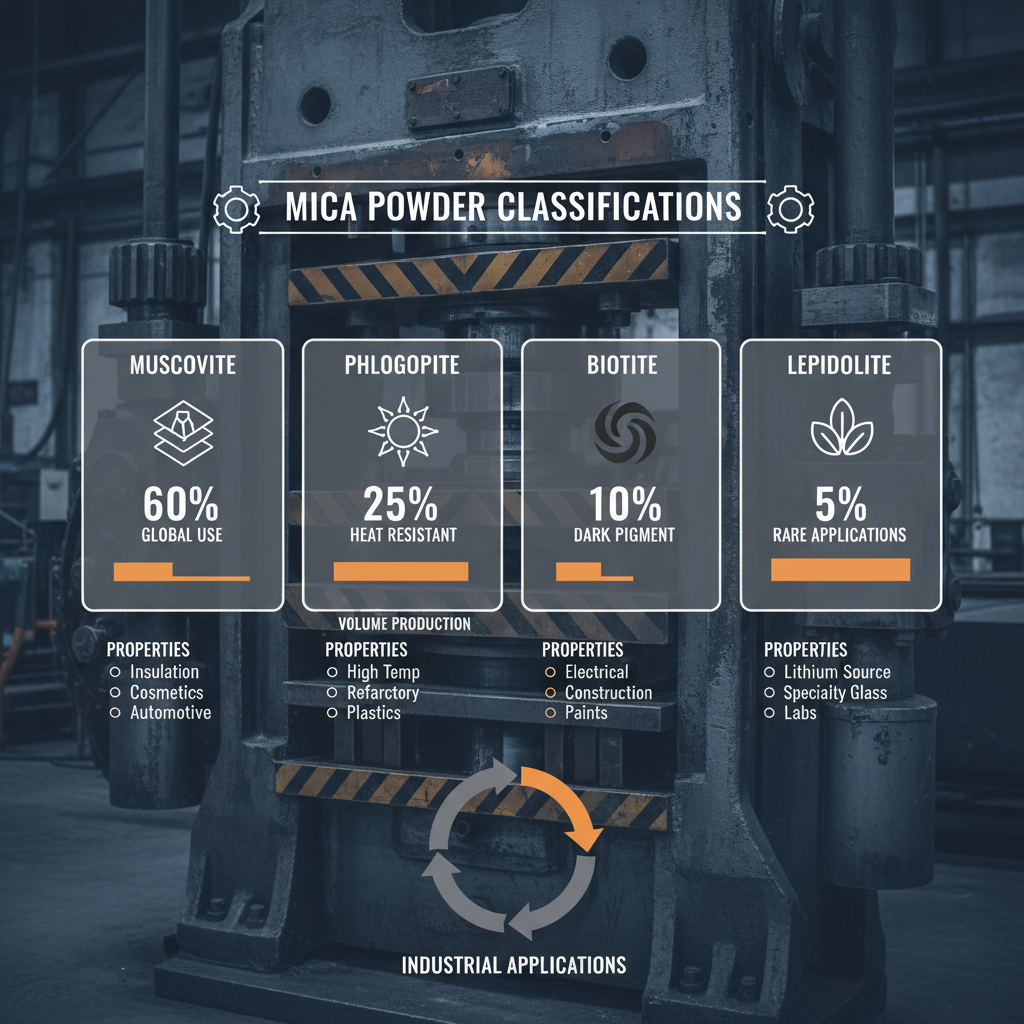
At its core, mica is a sheet silicate mineral, meaning its structure consists of silicon and oxygen atoms arranged in layers. These layers are weakly bonded, giving mica its characteristic cleavage—the ability to split easily into thin, flexible sheets. The most common types of mica are muscovite and phlogopite, each possessing slightly different chemical compositions and resulting properties. Muscovite, known for its clarity, is often used in applications requiring transparency.
Phlogopite, containing magnesium and iron, typically exhibits a more yellowish or brownish hue. Understanding these fundamental differences in composition and structure is crucial when selecting the appropriate types of mica powder for a specific application. Other, less common varieties like biotite also exist, each with unique characteristics influencing their suitability for various purposes.
Industrial Applications of types of mica powder
The diverse applications of mica powder are a testament to its versatile properties. In the paints and coatings industry, mica imparts a pearlescent effect, improves durability, and enhances resistance to cracking and weathering. The automotive industry utilizes mica in paints to achieve vibrant, long-lasting finishes. Similarly, in plastics, mica acts as a reinforcing agent, improving dimensional stability and heat resistance.
Beyond these, mica is critical in the electronics industry as an electrical insulator, preventing short circuits and ensuring component reliability. The cosmetic industry relies heavily on mica to create shimmer and luminosity in products like eyeshadows, foundations, and lipsticks. Even in drilling fluids, mica serves as a lubricant and shale stabilizer.
Furthermore, emerging applications of types of mica powder include their use in battery technology as a separator material, enhancing performance and safety. Its inert nature and thermal stability make it a promising material for advanced energy storage solutions.
Particle Size and its Impact on types of mica powder Performance
The particle size of mica powder is a critical factor influencing its performance in various applications. Finer particle sizes generally result in greater transparency and a smoother texture, ideal for cosmetics and high-gloss paints. Conversely, coarser particles offer improved opacity and coverage, suitable for applications like plastics and roofing materials.
Precise control over particle size distribution is crucial for achieving desired effects. For instance, in automotive coatings, a specific particle size range ensures optimal light scattering for vibrant color and a smooth, reflective finish. Manufacturers often employ techniques like milling and micronization to tailor particle size to meet specific application requirements.
Choosing the correct types of mica powder hinges on understanding how particle size influences properties like dispersion, opacity, and surface finish. Properly sized mica particles enhance the overall performance and aesthetics of the final product.
Color Variations and Pigment Properties of types of mica powder
While naturally occurring mica is often colorless or silver-white, it can be coated with various metal oxides to create a stunning array of iridescent colors. Titanium dioxide, iron oxides, and chromium oxides are commonly used to produce pearlescent pigments ranging from gold and bronze to red, blue, and green. These interference pigments create a vibrant effect due to the way light interacts with the layered structure of mica.
The thickness and composition of the metal oxide coating determine the resulting color and intensity. Different coating techniques and combinations of metal oxides allow for a vast palette of shimmering effects. The pigment properties, including color strength, opacity, and lightfastness, are crucial considerations for applications in paints, cosmetics, and plastics.
Color Intensity Ratings of Different types of mica powder Pigments
Global Sourcing and Ethical Considerations for types of mica powder
The majority of natural mica is sourced from countries like India, China, and Russia. However, concerns regarding child labor and unsafe mining practices in some regions have prompted increased scrutiny and a demand for ethically sourced mica. Companies are now prioritizing transparency and traceability in their supply chains.
Initiatives like the Responsible Mica Initiative (RMI) aim to improve working conditions and ensure responsible sourcing practices. Selecting suppliers committed to ethical sourcing is crucial for businesses looking to uphold sustainability standards and protect human rights. The demand for types of mica powder shouldn't come at the cost of social responsibility.
The Role of Surface Treatment in types of mica powder Applications
Surface treatment of mica powder significantly enhances its compatibility and performance in various matrices. Treatments with silanes, stearates, or other coupling agents improve dispersion in plastics and coatings, preventing agglomeration and maximizing optical properties.
Surface modification can also alter the hydrophobicity or hydrophilicity of mica, making it suitable for specific applications like water-based paints or oil-based coatings. Proper surface treatment ensures that the mica particles are effectively integrated into the final product, delivering optimal results.
This careful manipulation of surface characteristics is vital for tailoring types of mica powder to diverse industrial needs.
Comparative Analysis of Different types of mica powder Grades
Different grades of mica powder are classified based on factors like particle size, purity, and surface treatment. Synthetic mica, produced in a controlled environment, offers advantages in terms of purity and consistency compared to natural mica. However, natural mica remains a cost-effective option for many applications.
Grading standards vary depending on the intended use. Cosmetic-grade mica undergoes rigorous testing to ensure it meets stringent purity requirements. Industrial-grade mica may have lower purity standards but offer superior performance in applications like plastics and coatings.
Selecting the appropriate grade of types of mica powder depends on a careful assessment of performance requirements, cost considerations, and ethical sourcing practices.
A Comparative Overview of Common types of mica powder Grades
| Grade |
Purity Level |
Particle Size (µm) |
Typical Applications |
| Cosmetic Grade |
99.9% |
5-15 |
Eyeshadow, Lipstick, Foundation |
| Industrial Grade |
95-98% |
10-50 |
Paints, Plastics, Coatings |
| Electronic Grade |
99.5% |
2-10 |
Capacitors, Insulators |
| Synthetic Mica |
99.99% |
3-20 |
High-Performance Coatings |
| Pearlescent Mica |
98% |
10-30 |
Automotive Paints, Cosmetics |
| Fine Ground Mica |
97% |
1-5 |
Fillers, Molding Compounds |
FAQS
Muscovite mica is known for its clarity and is often preferred in applications requiring transparency, like high-end cosmetics or optical components. It boasts a higher refractive index. Phlogopite, conversely, typically appears yellowish or brownish due to its iron and magnesium content and is often used where color isn't a concern, or a subtle hue is desired. It exhibits superior heat resistance compared to muscovite. Understanding these distinctions is crucial when selecting the right types of mica powder for a specific purpose.
Look for suppliers who are members of initiatives like the Responsible Mica Initiative (RMI). Verify that the supplier has transparent traceability systems in place to track the mica back to its origin. Request certifications and audit reports demonstrating their commitment to ethical labor practices and environmental sustainability. Prioritizing certified suppliers guarantees a responsible supply chain and avoids contributing to harmful practices.
Surface treatment dramatically improves the dispersion of mica powder within coatings, preventing agglomeration and maximizing its effect on properties like gloss, durability, and weather resistance. Treatments like silanes or stearates create a chemical bond between the mica and the coating matrix, enhancing adhesion and reducing settling. Proper surface treatment ensures optimal performance and longevity of the coating.
Yes, synthetic mica offers several advantages, including higher purity, consistent particle size, and reduced risk of contaminants. While typically more expensive, its controlled production process delivers superior performance in demanding applications like high-performance coatings and electronics. Synthetic mica is a good option when stringent quality control is paramount, and consistent results are vital.
Finer particle sizes generally create a more subtle and delicate pearlescent sheen, ideal for foundations and highlighters. Larger particle sizes produce a more intense and noticeable shimmer, suitable for eyeshadows and lipsticks. The particle size distribution plays a crucial role in controlling the light reflection and diffraction, resulting in a desired optical effect.
Mica powder should be stored in a cool, dry, and well-ventilated area, away from direct sunlight and moisture. Keep containers tightly sealed to prevent contamination and maintain its original properties. Proper storage helps preserve its color, particle size distribution, and overall performance. Avoid storing mica powder near strong oxidizing agents.
Conclusion
From its fundamental composition to its diverse applications and ethical sourcing considerations, we've explored the multifaceted world of types of mica powder. Understanding the nuances of particle size, color variations, surface treatments, and sourcing practices empowers informed decision-making, leading to optimized product performance, enhanced sustainability, and responsible consumption. This knowledge is essential for industries spanning cosmetics, coatings, electronics, and beyond.
As technology advances and consumer demands evolve, the role of mica powder will continue to grow. Investing in research and development to explore new applications and sustainable sourcing methods is vital. By embracing innovation and prioritizing ethical practices, we can unlock the full potential of this remarkable mineral, ensuring its continued benefit for generations to come. Visit our website at www.hjmica.com to learn more and explore our wide range of mica powder products.