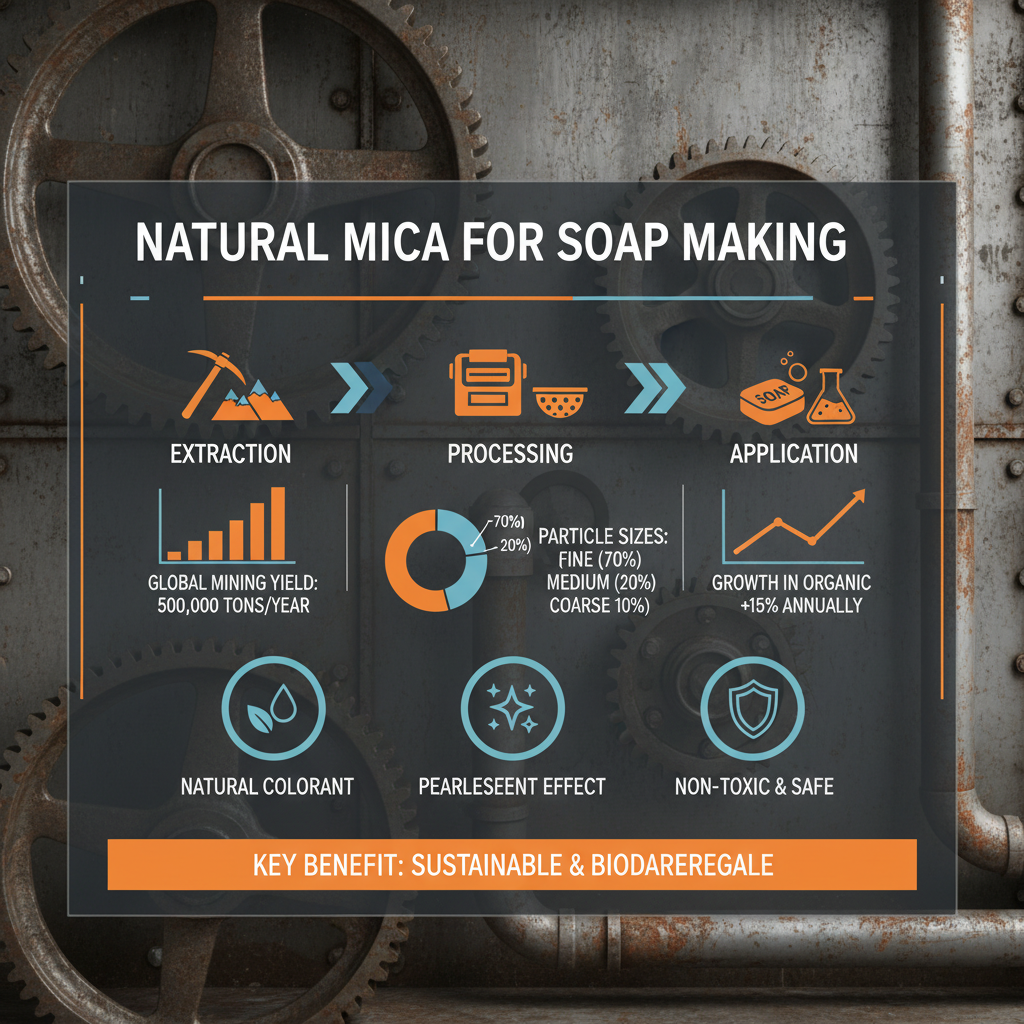
The integration of mica in makeup products has become a fundamental standard for achieving specific optical effects, ranging from a subtle natural glow to an intense metallic shimmer. As a silicate mineral known for its unique cleavage and reflective properties, mica serves as the primary vehicle for light diffusion and pigment suspension in high-end cosmetics.
Cosmetic formulators often struggle with balancing particle uniformity, purity, and the resulting skin feel. Inconsistent mica quality can lead to "streaking" on the skin or an unnatural, grainy texture, which directly impacts the perceived quality of the final makeup product and user satisfaction.
This analysis provides a technical evaluation of mica's role in cosmetics, focusing on the differences between natural and synthetic variations, the importance of particle size distribution, and the practical criteria for selecting high-purity mineral powders to ensure product stability and regulatory compliance.

Optical Principles of Mica in Cosmetics

Mica operates in makeup products primarily through the physics of light reflection and refraction. Because mica naturally forms in thin, flat sheets (lamellae), it acts as a series of microscopic mirrors. When applied to the skin, these plates align to reflect light in a specific direction, creating the "shimmer" or "pearlescent" effect that is highly desired in highlighters and eyeshadows.
Beyond aesthetics, mica provides essential functional benefits such as improving the "slip" of a product, which allows for smoother application. It also aids in the dispersion of other pigments, preventing clumping and ensuring that the color is distributed evenly across the skin surface without creating dense patches of pigment.
Synthetic vs Natural Mica: Performance Trade-offs
The choice between natural and synthetic mica significantly alters the visual outcome of a cosmetic product. Natural mica is prized for its authentic mineral feel and cost-effectiveness but can vary in purity. Synthetic mica, produced through controlled chemical processes, offers a level of transparency and clarity that natural minerals cannot match, making it the preferred choice for "super-strong" pearlescent series.
Synthetic mica typically exhibits higher whiteness and a more consistent crystal structure. This results in a "brighter" reflection and a more transparent base, which allows the added pearlescent pigments to pop with more intensity. While natural mica is suitable for matte foundations and powders, synthetic mica is indispensable for high-gloss, high-transparency cosmetic effects.
Critical Impact of Particle Size and Distribution
In the manufacturing of cosmetic-grade mica, the diameter-to-thickness ratio is the most critical factor for determining shine. A uniform particle size ensures that light reflects consistently across the application area. If the particle size is too varied, the product may appear "glittery" rather than "shimmery," which is often viewed as lower quality in professional makeup lines.
For high-end pearlescent pigments, a controlled range of 5-25 microns is typically targeted. Achieving this requires a meticulous production process involving softening water, multiple cleaning cycles to remove interlayer impurities, and soft grinding techniques that avoid brute force shear, thereby preserving the integrity of the mica sheets and their natural brilliance.
Evaluating Purity and Surface Quality
Purity in mica is not just about chemical composition but also about the absence of surface contaminants. Impurities located between mica layers can dampen the reflection and cause the powder to clump. High-purity mica, often reaching whiteness levels above 95ppm, ensures that the final cosmetic product is bright and free from unwanted grey or yellow tints.
The conceptual chart above illustrates a relative performance index across different mica grades. High-purity synthetic mica scores highest in transparency and gloss, whereas standard natural mica provides better bulk and opacity, demonstrating that the selection must be driven by the specific visual goal of the product.
Application Scenarios Across Makeup Categories
Different makeup categories require different mica specifications. For instance, face powders and foundations require a very fine, uniform particle size to create a "soft-focus" effect that blurs imperfections. In contrast, eyeshadows and highlighters utilize mica with a higher gloss index and specific pearlescent coatings to create focused points of light on the face.
In liquid cosmetics, such as nail polish or liquid lipsticks, the mica must be processed to ensure it remains in suspension without settling too quickly. This requires a precise balance of particle density and surface treatment to maintain a homogeneous mixture throughout the product's shelf life.
Regulatory Compliance and Safety Standards
The use of minerals in cosmetics is strictly governed by global safety standards. Compliance with REACH and RoHS regulations is essential for manufacturers to ensure that the mica is free from heavy metals and harmful contaminants. These certifications guarantee that the mineral powder is safe for prolonged skin contact and non-toxic to the user.
From a procurement perspective, verifying the Technical Data Sheet (TDS) and Material Safety Data Sheet (MSDS) is mandatory. These documents provide the chemical evidence of purity and safety, ensuring that the mica grade used is appropriate for cosmetic applications and meets the legal requirements of the target market.
Mica Selection Decision Framework
Choosing the right mica requires a multidimensional analysis of the desired end-result versus the technical constraints of the mineral. The following framework compares three common approaches to mica selection based on typical cosmetic industry requirements.
| Selection Grade | Primary Benefit | Best Application | Key Constraint |
|---|---|---|---|
| Natural Grade | Cost Efficiency | Matte Foundations | Variable Purity |
| Refined Natural | Balanced Glow | Everyday Powders | Moderate Shine |
| Synthetic Pure | Extreme Clarity | High-End Highlighters | Higher Cost |
| Pearlescent Coated | Metallic Effect | Eye Shadows | Complex Processing |
| Fine Micronized | Skin-Blurring | Primers/Setting Powders | Low Reflectivity |
| Super Strong Series | Maximum Brilliance | Luxury Cosmetics | Strict Particle Control |
Ultimately, the decision should be based on the "TDS match" — ensuring the particle size (e.g., D50: 10-13μm) and whiteness (>95ppm) align precisely with the formulation's requirements for texture and optical performance.
Frequently Asked Questions
Synthetic mica provides higher transparency, superior whiteness, and more consistent particle size, which results in a brighter and more uniform shimmer compared to natural mica.
Uniform, small particle sizes (5-25 microns) create a smooth, pearlescent glow. Wide distributions or larger particles create a chunky, glitter-like effect.
Yes, provided it complies with REACH and RoHS regulations. Synthetic mica is often purer than natural mica because it is created in controlled environments.
Whiteness (measured in ppm) indicates the absence of impurities. Higher whiteness (>95ppm) ensures that the mica does not alter the color of the pigments it is mixed with.
Soft grinding prevents the "brute force shear" of mica sheets, preserving their flat shape and diameter-thickness ratio, which is essential for maximum light reflection.
Request a detailed TDS (Technical Data Sheet) and MSDS, and check for certifications like ISO9001 to ensure standardized production and quality control.
Conclusion
The effectiveness of mica in makeup products depends entirely on the precision of its physical properties—specifically purity, particle size uniformity, and the structural integrity of the mineral sheets. While natural mica remains a staple for bulk application, synthetic mica has redefined the standards for high-end, high-brilliance cosmetics through superior optical clarity and rigorous purity controls.
Cosmetic manufacturers seeking to optimize their product texture and shimmer can review technical specifications and procurement options at www.hjmica.com to ensure their mineral inputs meet professional industry standards.