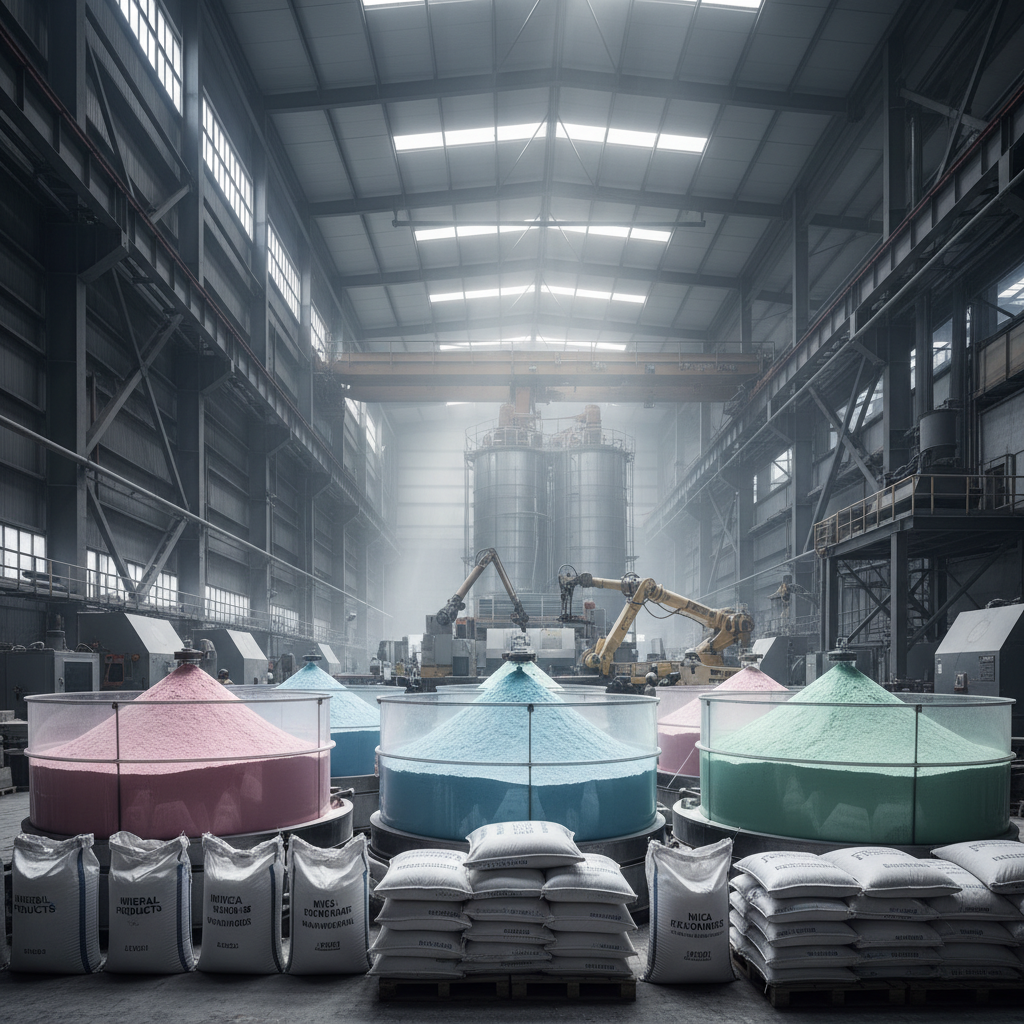
Selecting a reliable mica source often comes down to a fundamental trade-off between purity, mechanical reinforcement, and cost-efficiency. In high-precision industries, the difference between natural muscovite and synthetic alternatives can dictate the failure or success of a critical component.
The demand for specialized mineral fillers has shifted toward materials that offer not just insulation, but enhanced UV resistance and moisture stability. This transition is particularly evident in the rubber and plastics sectors, where terminal product longevity is a key performance indicator.
Understanding the operational capabilities of a professional mica factory allows engineers to optimize additive ratios for specific industrial needs, moving beyond generic powder applications to tailored mineral solutions.


The transition from basic crushing to advanced peeling and grading has redefined the utility of mica. In the early stages of mineral production, the focus was primarily on volume; however, modern requirements for cosmetic and medical grades demand extreme precision in diameter-to-thickness ratios.
Huajing, established in 1994 in the Lingshou mica base, exemplifies this shift. By integrating specialized laboratories and investing roughly 7% of annual income into R&D, the focus has evolved from rough fiber panels to high-purity powders used in delicate cosmetics and critical rubber components.
Synthetic mica is engineered through high-temperature melting processes, which fundamentally alters its physical properties compared to natural minerals. One of the most critical technical advantages is its exceptionally high diameter-to-thickness ratio and low iron content, which results in a whiteness levels that closely approach those of calcium carbonate.
From a mechanical standpoint, synthetic mica provides a unique combination of purity and structural integrity. Unlike some soft fillers, it maintains high tear resistance, ensuring that reinforced materials do not shatter under stress. This makes it an essential additive for products where mechanical strength cannot be sacrificed for aesthetic whiteness.
Furthermore, the melting process ensures that the resulting mineral has very low moisture absorption. In humid operational environments, this property is vital for maintaining consistent electrical insulation, preventing the degradation of the material's dielectric properties over time.
When deciding between natural Muscovite and synthetic mica, the decision usually rests on the specific requirements of the end product. Muscovite is widely used for general insulation, but it often carries higher impurities and varied iron content, which can affect the final color and purity of the composite.
Synthetic mica outperforms Muscovite in whiteness and UV resistance, while providing superior tear resistance compared to calcium carbonate, making it the optimal choice for medical-grade rubber components.
This relative advantage is particularly crucial in the production of medical plugs and high-performance seals. While calcium carbonate might offer similar whiteness, its tendency to create brittle points in the rubber matrix can lead to premature failure—a risk that synthetic mica effectively mitigates.
The integration of synthetic mica into rubber compounds serves a dual purpose: enhancing the physical appearance and extending the service life of the material. Because it is processed at high temperatures, it possesses inherent UV resistance that protects the polymer matrix from oxidative stress.
This results in a significant reduction in aging and fading for terminal rubber products exposed to outdoor environments. When analyzed against other fillers, synthetic mica shows a distinct advantage in maintaining mechanical properties without compromising the aesthetic requirements of high-end industrial parts.
In a typical industrial setting, such as the production of medical-grade stoppers, the requirement for zero-shatter reliability is paramount. Synthetic mica is utilized here as a reinforcing agent that allows the rubber to remain flexible and white, ensuring that plugs do not crack or fragment during insertion into glass vials.
Beyond medical use, Pearlescent Pigments and Cosmetic Mica rely on the specific plate-like structure of the mineral to create light-reflecting effects. The purity of the mineral prevents discoloration in skincare and makeup products, where any iron contamination would render the product unusable.
The mineral industry is currently shifting toward a "green factory" concept, emphasizing the sustainable extraction and processing of non-renewable resources. The goal is to maximize the potential of every ton of mica, reducing waste during the peeling and grinding stages.
Standardization through ISO 9001, ISO 14001, and ISO 45001 is no longer optional but a requirement for global supply chains. This ensures that the environmental footprint of the mica factory is managed through scientific production cycles and waste reduction strategies.
Future innovations are likely to focus on modified plastics and rubber additives that further enhance biodegradation without sacrificing the mechanical properties provided by mineral fillers. The focus remains on releasing the full potential of the resource while adhering to strict sustainability mandates.
Selecting the right mica grade requires a balance of technical requirements and cost constraints. Buyers must evaluate whether their application prioritizes aesthetic whiteness, electrical insulation in humid conditions, or long-term UV stability.
A common error in selection is choosing a filler based on cost alone, neglecting the tear resistance and moisture absorption rates. For instance, substituting synthetic mica with cheaper calcium carbonate in high-stress rubber parts often leads to increased failure rates due to material brittleness.
The following framework provides a relative suitability index based on common industrial requirements to guide the procurement process.
| Requirement | Synthetic Mica | Natural Muscovite | Calcium Carbonate |
|---|---|---|---|
| Whiteness Level | Very High | Medium | High |
| Tear Resistance | High | Medium | Low |
| Moisture Resistance | Excellent | Moderate | Moderate |
| UV Stability | High | Low | Moderate |
| Dielectric Strength | Very High | High | Low |
| Iron Content | Very Low | Variable | Low |
Quality is primarily defined by the purity of the mineral, the consistency of the particle size distribution (grading), and the diameter-to-thickness ratio of the flakes. A professional facility utilizes specialized peeling and grinding lines to ensure that the powder meets specific industry standards, such as low iron content for cosmetics or high insulation values for electrical rubber components.
While both materials can provide high whiteness, synthetic mica offers significantly better tear resistance. In medical applications like stoppers or plugs, the material must withstand mechanical stress without shattering. Calcium carbonate can make the rubber too brittle, whereas synthetic mica reinforces the matrix, ensuring the product remains intact during use.
Synthetic mica has inherently strong UV resistance due to its high-temperature production process. When added to rubber, it acts as a stabilizing agent that helps prevent the polymer from aging, cracking, or fading when exposed to sunlight. This extends the operational lifespan of terminal products used in outdoor environments.
It can be used, but it is often less desirable than synthetic or highly refined mica due to its variable iron content and purity. For high-end cosmetics, any hint of discoloration can affect the product's appeal. Synthetic mica provides a consistent, high-purity base that ensures the pearlescent pigments remain bright and uniform.
High moisture absorption can lead to a drop in dielectric strength, potentially causing electrical failure in humid environments. Synthetic mica is melted at extreme temperatures, resulting in a material with very low moisture absorption. This ensures that the insulation properties remain stable even in damp or high-humidity industrial settings.
Buyers should look for certifications like ISO 9001 and ISO 14001, but more importantly, they should evaluate the supplier's R&D investment and laboratory capabilities. The ability to provide detailed reports on iron content, particle size distribution, and the specific peeling technology used is a strong indicator of a supplier's expertise and consistency.
The strategic selection of mica fillers represents a critical decision in material science, impacting everything from the aesthetic finish of a cosmetic product to the structural integrity of a medical device. As manufacturing requirements evolve, the shift toward synthetic mica and high-purity powders highlights a growing industry demand for materials that combine purity with mechanical resilience.
By focusing on technical parameters such as UV stability, moisture resistance, and tear strength, manufacturers can move beyond basic filling and toward genuine material optimization. Partnering with a facility that prioritizes standardized management and continuous R&D ensures that these technical requirements are met with consistency and sustainability.